…vows to hold FG to 1% GDP Research Funding promise
By Joseph Erunke, Abuja
Nigeria’s scientific community has renewed calls for improved research funding, warning that without sustained investment, the country risks missing out on the economic and social benefits of innovation.
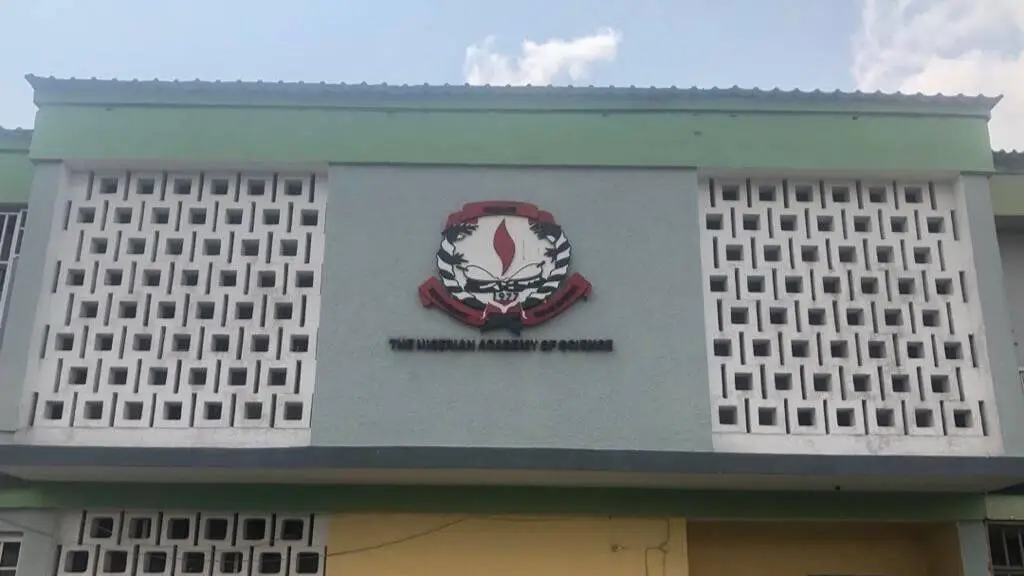
To this end, the Nigerian Academy of Science ,NAS,has declared its resolve to ensure that the federal government’s commitment to allocate one per cent of the nation’s Gross Domestic Product,GDP,to research moves beyond policy statements to concrete action.
Speaking in Abuja,at the 7th Annual Scientific Conference of the Nigerian Academy of Science, yesterday, NAS President, Prof. Abubakar Sambo, said the Academy is intensifying efforts to ensure the federal government’s pledge to allocate one per cent of GDP to research is fully implemented.
He said Nigeria possesses a pool of world-class researchers whose contributions remain constrained by chronic underfunding.
Sambo noted that President Bola Tinubu’s recent decision to dedicate one per cent of GDP to research represents a critical opportunity to reposition science as a driver of national development, stressing that the Academy would actively push for the decision’s full implementation.
According to him,Tinubu’s decision to allocate one per cent of GDP to research could mark a turning point if properly implemented, adding that the Academy would actively advocate for the policy’s execution.
“A government announcement is one thing; actualising it is another. “Our duty is to ensure this commitment translates into real funding, “he said.
The conference, themed “From Research to Market: The Making of Knowledge-Based Economies,” focused on bridging the gap between academic research and practical solutions capable of addressing Nigeria’s socio-economic challenges.
Sambo explained that financial limitations have also influenced how the Academy rewards excellence, with the NAS Gold Medal now awarded on a rotational basis across scientific disciplines.
This year’s Life Sciences award went to Prof. Stephen Adefegha of the Federal University of Technology, Akure, for his research into the biological activities of Moringa oleifera, work rooted in traditional medicine and validated through scientific inquiry.
According to Sambo, Nigeria does not suffer from a shortage of intellectual capacity but from a system that fails to translate research findings into market-ready solutions.
“This year’s theme is from research to the market,” he said, noting that NAS plans to work with government agencies and private sector players to commercialise research outputs.
As part of this push, the Academy has strengthened mentorship programmes through the Nigerian Young Academy, targeting early-career researchers and recent PhD graduates to guide them towards impact-driven science.
Nigeria currently spends only about 0.2 per cent of its GDP on research, a figure repeatedly criticised by academics, including former National Universities Commission Executive Secretary, Emeritus Professor Peter Okebukola.
Financial constraints, Sambo said, have also forced NAS to stagger its prestigious Gold Medal awards across disciplines, with Life Sciences recognised in 2026 and Physical Sciences scheduled for the next cycle.
As Nigeria seeks to build a knowledge-based economy, NAS insists that increased, sustained funding remains the key to unlocking the nation’s scientific and developmental potential.
Over the years, there have been calls for the Nigerian government to increase funding for research from its current share of GDP to one per cent.
In December 2025, a former Executive Secretary of the National Universities Commission, Emeritus Professor Peter Okebukola, while delivering the Kwara State University convocation lecture, decried low funding for research and development in the nation’s universities.
The professor lamented that Nigeria invests only 0.2 per cent of its GDP in research, recommending a significant increase in research and development funding for both state and federal universities across the country.